
In today’s reading, we follow Jacob’s eventful journey in Genesis 28–30—a tapestry of divine encounters, family entanglements, and personal growth. These chapters highlight core human experiences: searching for purpose, navigating complicated relationships, and learning to trust in a bigger plan than our own. While the events unfold in an ancient context, they mirror many of the challenges and hopes we face today.
Genesis 28 begins with Jacob fleeing from home after deceiving his father, Isaac, and provoking his brother Esau’s anger. During his flight, Jacob has a striking dream in which he sees a ladder (or stairway) reaching from earth to heaven. He hears God reaffirm the covenant made to Abraham and Isaac: that Jacob’s offspring will be numerous, and through his family, “all peoples on earth will be blessed” (Genesis 28:14). The dream scene is a reminder that God often breaks into our lives during moments of vulnerability and uncertainty. In our modern world, we frequently move through transitions—new jobs, changing relationships, or relocations. Like Jacob, these are pivotal times when we may sense a call or feel a nudge that our lives have a purpose beyond what meets the eye.
Genesis 29 and 30 unfold Jacob’s stay with his uncle Laban, where he works to marry Laban’s daughter Rachel, only to be tricked into marrying her older sister Leah first. This sequence of events is replete with rivalries, heartbreak, and perseverance. Laban’s deception echoes the trickery Jacob himself employed earlier—indicating that life sometimes forces us to confront our own flaws in the mirror of our experiences. Modern readers might see themselves in Jacob’s story—those moments when we realize our actions are coming back to us in unexpected ways, or when we feel we’ve been outsmarted, blindsided, or taken advantage of.
Meanwhile, Jacob’s relationships with Leah and Rachel illustrate the complexities of love, jealousy, and belonging. Rachel, though the beloved wife, struggles with infertility, while Leah, though fertile, yearns for affection and validation from Jacob. Today, these same themes surface in our own lives: the competition for attention, the longing for acceptance, and the heartbreak of unfulfilled desires. Mental health professionals often stress that comparisons and rivalries can corrode self-worth and damage family bonds. Building empathy and healthy communication—skills Jacob’s household sorely lacked—remains critical in our modern relationships.
As Jacob’s family expands, we see God at work despite human scheming. Old Testament scholar Dr. Tremper Longman III notes that Genesis consistently portrays God’s faithfulness to flawed people, underscoring that “His purposes march on even in the midst of human weakness.” This rings true for us today: our failures, family drama, and disappointments can feel overwhelming, yet none of these derail the possibility of grace, growth, and redemption. The births of Jacob’s children—including sons who will become the leaders of Israel’s twelve tribes—affirm that divine plans can unfold through messy circumstances.
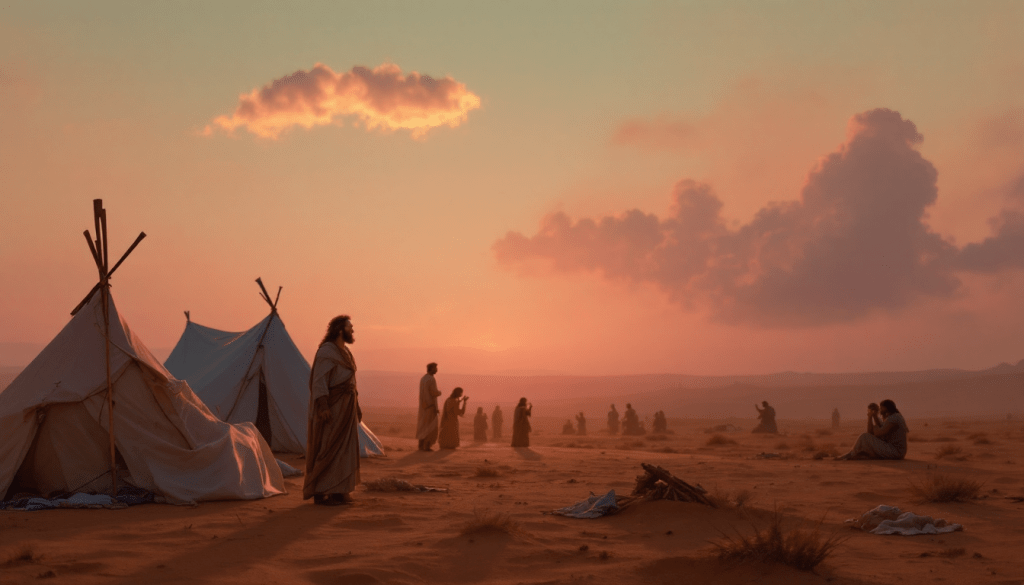
Reflecting on Genesis 28–30, we confront the universal desire to find meaning, to be loved, and to rise above our past mistakes. Jacob’s dream at Bethel reminds us that every place—even a barren wilderness—can become sacred ground if we open ourselves to God’s presence. His prolonged, fraught experience with Laban and his wives teaches us that life’s greatest lessons often arise in the midst of difficulty. As you continue on your own journey, remember that God can speak through your restless nights, guide you through your relational complexities, and shape a future filled with promise—even when today’s situation feels tangled. May Jacob’s story encourage you to keep seeking divine direction, trusting that in spite of setbacks, you too can move forward under the watchful care of a God who never abandons His promises.






 The Bible Daily Read
Leave a comment