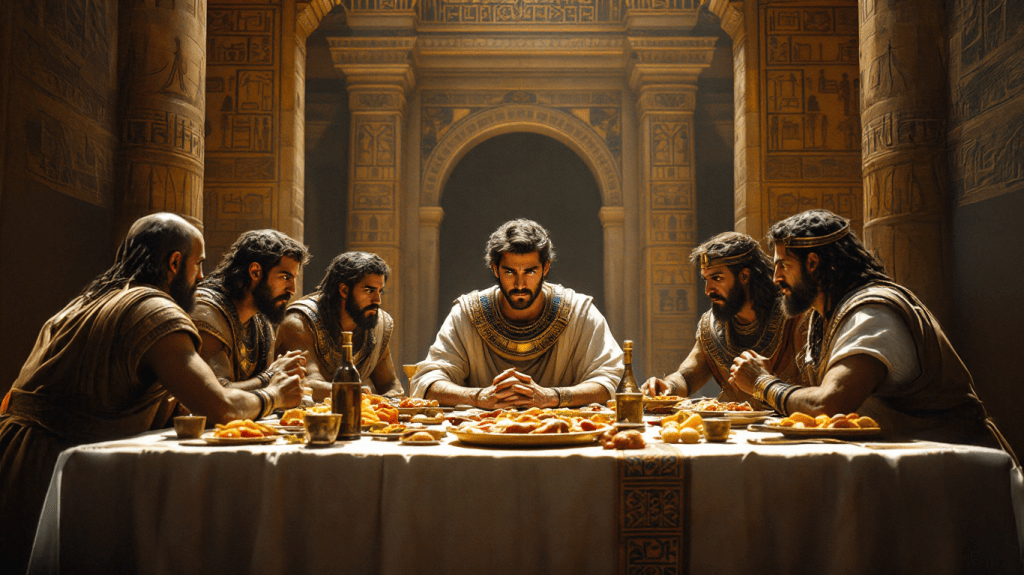
In today’s reading, we continue Joseph’s epic story in Genesis 43–45. After enduring betrayal, slavery, and imprisonment, Joseph has ascended to a position of great influence in Egypt. Now, his brothers return to buy more grain amidst a severe famine, forcing everyone to confront past wounds and choices. These chapters explore the powerful themes of testing, repentance, and forgiveness—realities that remain profoundly relevant in our modern lives.
Genesis 43 begins with Jacob reluctantly sending his sons back to Egypt with Benjamin, the youngest brother, because the famine in Canaan has become dire. Joseph, still unrecognized by his brothers, orchestrates an emotional test at a banquet. He seats them in birth order and shows favoritism to Benjamin with extra portions. This scenario mirrors many modern family or group dynamics: a moment when tensions lurk just beneath the surface, and old grievances or jealousies threaten to flare. Joseph’s strategy reveals more than simple theatrics; he’s discerning whether his brothers have changed since the days they plotted against him.
By Genesis 44, Joseph intensifies the test by framing Benjamin for stealing his silver cup. This incident pushes the brothers to a critical juncture. Would they abandon Benjamin, as they once did Joseph, or stand by him at any cost? Their reaction offers a glimpse into genuine transformation: Judah, who had once recommended selling Joseph, now steps forward to plead for Benjamin’s release. He even offers himself as a substitute—a profound expression of sacrificial love and ownership of past mistakes. Many of us can relate to such situations: relationships strained by betrayal or mistrust, where true reconciliation hinges on actions rather than mere words. Judah’s selfless plea resonates with our own need, at times, to prove our remorse through changed behavior.
Genesis 45 brings one of the most moving revelations in Scripture. Joseph, overwhelmed by emotion, finally discloses his identity: “I am Joseph!” He chooses reconciliation over revenge, offering compassion to the very people who sold him into slavery. It’s a striking demonstration of forgiveness and grace in action. In a world where social media can amplify grudges and personal offenses, Joseph’s stance stands out. He refrains from blaming or shaming his brothers; instead, he frames their actions within God’s larger plan to preserve life (Genesis 45:5). This perspective challenges our default reactions to hurt and disappointment, inviting us to see how adversity can be transformed into an instrument of redemption.
Renowned Old Testament scholar Dr. Walter Brueggemann points out that Joseph’s response highlights a central biblical theme: God works through human frailty and wrongdoing to bring about restoration. In modern terms, this means that even when we stumble—hurting those we love or being hurt ourselves—healing remains possible. Joseph’s story demonstrates that true forgiveness doesn’t trivialize the past but redeems it, leading to deeper trust and unity on the other side of conflict.
As you reflect on Genesis 43–45, consider the difficult relationships in your own life. Where might you be resisting genuine dialogue or a chance to offer forgiveness? Are there ways to measure transformation—both yours and others’—by looking for changed behavior rather than merely waiting for apologies? Joseph’s story reminds us that reconciliation is a journey marked by tests, genuine repentance, and ultimately, the choice to extend grace. May it inspire you to believe that even life’s darkest betrayals can become part of a wider tapestry of hope when viewed through the lens of faith and love.







 The Bible Daily Read
Leave a comment