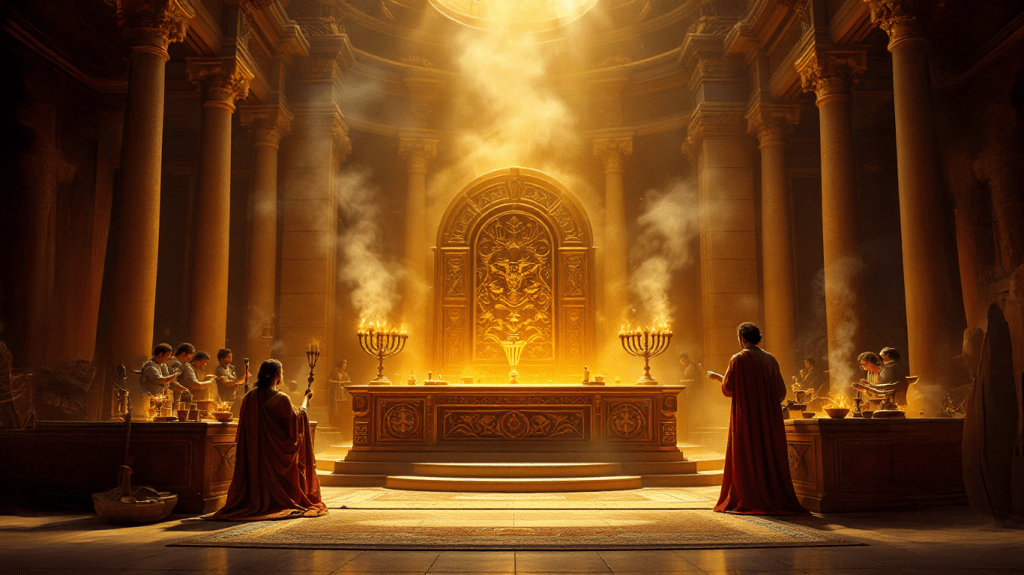
Today’s reading, Exodus 30–32, traverses a fascinating range of topics: the final furnishings and rituals for the Tabernacle (Exodus 30), the call of skilled artisans (Exodus 31), and the dramatic episode of the golden calf (Exodus 32). Though these chapters describe ancient events, they pose timeless questions about devotion, creativity, and the pitfalls of misplaced worship.
Exodus 30 outlines several additional instructions for the sacred space: an altar of incense, atonement money for a census, and the recipe for anointing oil and incense. These details illustrate how worship was woven into every facet of the Israelites’ communal life. The incense altar, for instance, symbolizes the continuous prayers of the people rising before God. Modern believers, while rarely burning incense in a tabernacle, still seek tangible reminders of spiritual realities—be it lighting a prayer candle at home, journaling, or setting aside specific times for silence and reflection. Old Testament scholar Dr. John Walton notes that such rituals help “bridge the gap between the physical and spiritual realms,” prompting us to remain aware of God’s presence in the ordinary rhythm of our days.
Exodus 31 shifts to the appointment of Bezalel and Oholiab, divinely gifted artisans tasked with constructing the Tabernacle’s intricate elements. This highlights a biblical precedent for artistry and craftsmanship as sacred callings. In a culture that often relegates creativity to side projects or hobbies, these verses affirm that imaginative gifts can be genuine expressions of worship and service. Whether you’re a painter, software developer, chef, or gardener, your creative endeavors can honor the Creator by bringing beauty, function, and inspiration to others. Recognizing our diverse talents as God-given allows us to integrate faith into every dimension of our work and artistry.
The tone dramatically shifts in Exodus 32, where we encounter the golden calf incident. As Moses lingers on Mount Sinai, the Israelites grow impatient. They craft an idol from gold earrings, proclaiming it their new “god” who brought them out of Egypt. This blatant turn to idolatry reveals a powerful lesson: when we lack visible reassurance of God’s presence, we may latch onto something more tangible—even if it’s false or harmful. Modern idolatry doesn’t usually take the form of metal statues, yet we can still idolize success, status, or personal comfort. In times of uncertainty—like job instability or community upheaval—our human tendency is to seek immediate security or gratification, forgetting the transcendent reality that led us through difficulties before.
Moses’ response offers further insight into leadership and intercession. He pleads with God to spare the people, reminding the Lord of His promises, and then confronts the idolaters directly. This dual approach—praying on behalf of those who’ve gone astray while also challenging destructive behavior—speaks to contemporary challenges of conflict resolution and accountability. Leaders in faith communities, workplaces, or families may need to mediate between mercy and truth, balancing empathy with firm boundaries. Moses shows that genuine love does not shy away from candid confrontation but also advocates for restoration and healing.
As you reflect on Exodus 30–32, consider the rituals and creative expressions that anchor you spiritually. Do you set aside specific times to nurture your relationship with God, or infuse beauty into your daily tasks as an act of worship? How might you discern and dismantle modern idols—whether they be money, ambition, or distraction—that can eclipse genuine faith? And in moments of communal failure, can you hold space for both intercession and accountability? These ancient chapters remind us that worship involves more than ceremonies; it’s about orienting our whole being—our artistry, work, and allegiances—toward the God who remains faithful, even when we falter.






 The Bible Daily Read
Leave a comment