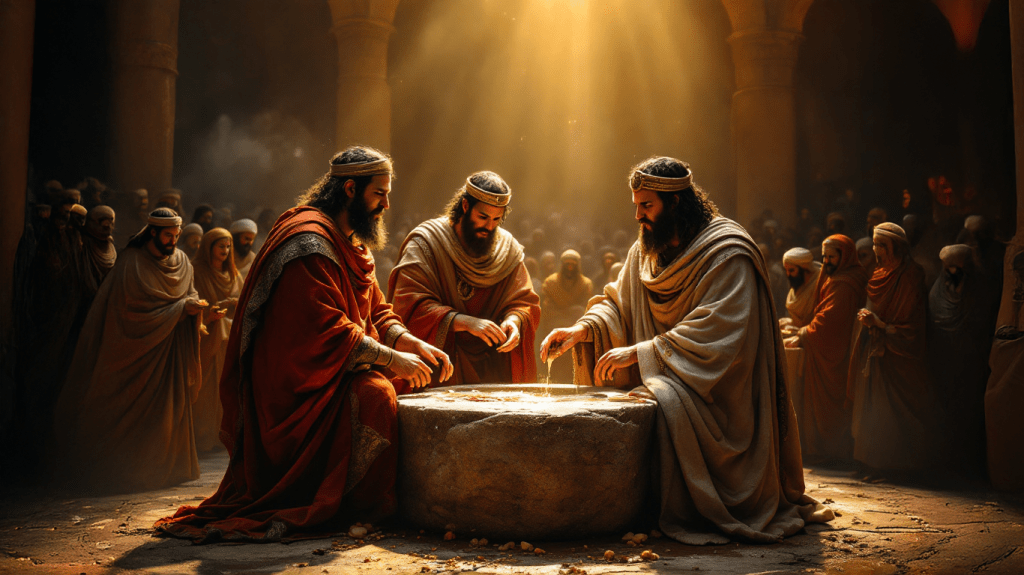
Today’s reading leads us into Leviticus 7–9, where we encounter further instructions on various offerings and witness the dramatic ordination of Aaron and his sons as priests. Although these chapters describe an ancient sacrificial system, they reveal lasting insights about community life, accountability, and the sacred privilege of drawing near to the Divine.
Offerings and Community Care (Leviticus 7)
Leviticus 7 expands on guilt offerings and fellowship offerings, underscoring a central concern of the Torah: relationships within the community. The guilt offering requires concrete restitution for harm done—often including an added penalty to ensure justice and restoration. Today, while we no longer present animal sacrifices, the core principle of making amends remains strikingly relevant. Modern counselors often stress the importance of “owning our mistakes” and “making it right” as key to healing relational breaches. Whether it’s repaying a debt, apologizing sincerely, or dedicating resources to someone we’ve hurt, Leviticus reminds us that true remorse goes beyond words and seeks tangible paths toward reconciliation.
The fellowship offering (also called the peace offering) points to a community-centered spirituality. Part of this sacrifice was consumed in a shared meal, fostering fellowship among the worshiper, the priest, and God. In our individualistic culture, we sometimes forget that worship can be deeply communal—something we do with others, not just alongside them. Sharing resources, meals, and experiences can be a powerful act of solidarity and gratitude, echoing the ancient Israelite practice of joining together to celebrate God’s goodness.
Ordination and Sacred Responsibility (Leviticus 8–9)
Chapters 8 and 9 shift to the consecration of Aaron and his sons, the first official priests of Israel. Moses leads a public ceremony, washing them, clothing them in priestly garments, anointing them with oil, and offering sacrifices on their behalf. These carefully orchestrated rites highlight both the privilege and the weight of spiritual leadership. To serve as a priest was to bear responsibility for the people’s worship and to mediate between humanity and God.
For contemporary readers, while we may not don elaborate priestly robes, the principle remains: those who lead—whether in faith communities, workplaces, or families—carry a distinct obligation to serve with integrity and humility. Dr. John Walton, an Old Testament scholar, points out that “holiness” in Leviticus is not limited to moral purity; it also involves being set apart for God’s purposes. By extension, any modern role dedicated to uplifting and guiding others can be seen as a “priestly” calling, one that demands careful preparation and a heart attuned to the well-being of the entire community.
Awe and Worship in Action
The climactic moment in Leviticus 9 is when God’s fiery presence consumes the sacrifice (v. 24). This visible sign of acceptance stirs awe and reverence among the people. While we might not witness fire descending at a Sunday service or a community gathering, we can still experience the profound sense of God’s nearness—a moment when efforts made with reverence and faith resonate with divine approval. Such encounters, though less dramatic, occur when communities unite in purpose, uphold justice, and cultivate genuine love for one another.
As you contemplate Leviticus 7–9, consider how you might practice communal care in everyday life—sharing not only resources but also responsibility for others’ flourishing. Reflect on what “priestly service” could look like in your context: advocating for coworkers, mentoring younger community members, or fostering reconciliation in a divided setting. Even centuries removed from the Tabernacle rituals, these chapters remind us that worship, at its heart, is not just ritual but a sacred invitation to embody compassion, service, and awe before the God who calls us into covenantal life together.







 The Bible Daily Read
Leave a comment