
In today’s reading, we explore Numbers 13–15—a pivotal moment in Israel’s journey to the Promised Land. The narrative highlights the spies sent to survey Canaan, the people’s fearful response, and the subsequent consequences of disobedience. Although set in an ancient wilderness context, these chapters challenge us with timeless questions about courage, faith, and the cost of ignoring a higher calling in our modern world.
Spies and the Power of Perspective (Numbers 13)
Numbers 13 begins with Moses dispatching twelve men—one from each tribe—to scout Canaan. After forty days, they return bearing samples of abundant produce but also reports of towering inhabitants and fortified cities. Ten of the spies emphasize these daunting obstacles, stirring panic among the Israelites. Only Caleb and Joshua urge trust in God’s promises: “We should go up and take possession of the land, for we can certainly do it” (Numbers 13:30).
In contemporary life, we regularly face “giants” in the form of career uncertainties, social challenges, or seemingly insurmountable personal goals. Old Testament scholar Dr. Gordon J. Wenham points out that the spies’ differing outlooks underscore how two people can see the same facts yet interpret them drastically differently, based on their trust (or lack thereof) in God’s guidance. Whenever we confront intimidating realities—economic downturns, tight deadlines, or critical decisions—our mindset can be shaped either by fear that shrinks possibilities or by faith that propels us forward with resilience and hope.
Rebellion and Consequence (Numbers 14)
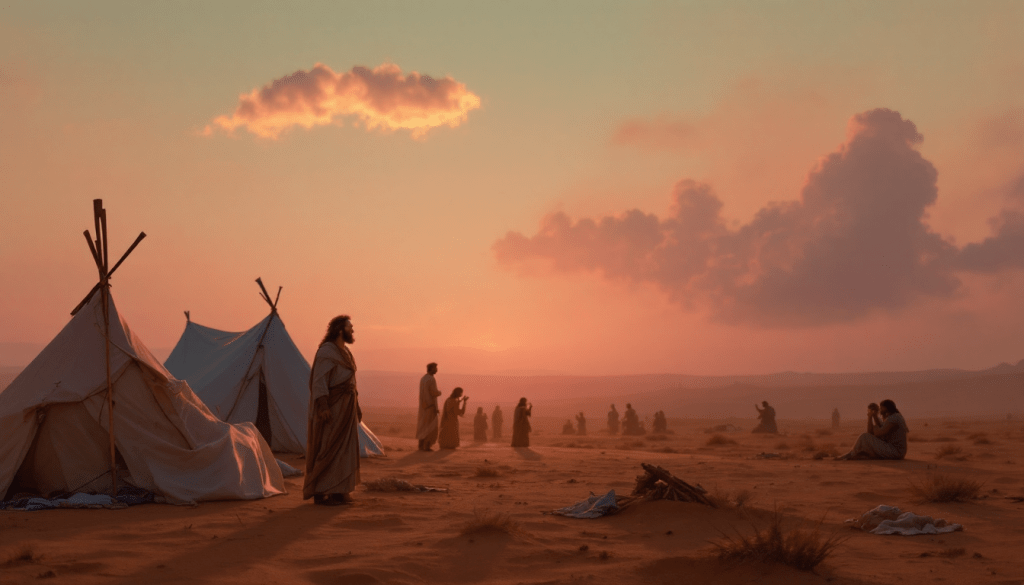
Sadly, the community aligns with the fearful spies, rebelling against Moses and Aaron. They even contemplate returning to Egypt—an ironic longing for the “comfort” of slavery rather than facing the unknown. God responds to this rebellion by condemning that entire generation (except for Caleb and Joshua) to wander in the wilderness for forty years, never entering the land they doubted they could possess.
We might not face literal deserts, but the principle remains sobering: when we shrink back from necessary risks or abandon convictions at the sight of obstacles, we can end up drifting without progress. Rebellion in this context isn’t just about shaking a fist at authority; it’s about rejecting the growth and destiny that comes with our calling. Many of us know the regret of missed opportunities—a promising venture we abandoned too soon, a relationship we sabotaged through fear, or a dream we dismissed before it had a chance to flourish. Numbers 14 reminds us that persistent unbelief can lead to a prolonged season of stagnation, draining both personal and communal vitality.
Unintentional and Defiant Sin (Numbers 15)
Numbers 15 rounds out the section with laws regarding offerings and sacrifices, distinguishing unintentional mistakes from deliberate defiance. While the specifics of ancient Israel’s sacrificial system may not directly apply to our modern contexts, the emphasis on intention speaks volumes. In an era where accountability often hinges on motive—think legal differentiations between manslaughter and premeditated crimes—this ancient text affirms that human actions can come from negligence or outright rebellion, and both carry consequences. Yet the passage also points to the possibility of restoration: unintentional wrongs could be rectified through specific offerings, underscoring a God who balances justice with mercy.
Reflections for Today
Numbers 13–15 exposes the tension between faith-filled vision and paralyzing fear, urging us to consider whether we allow obstacles to overshadow divine promises. It challenges us to own the consequences of our choices: do we settle for what’s comfortable, even if it’s stifling, or push through uncertainty, trusting in a purpose greater than our limitations?
As you digest these chapters, ask yourself: Where are you seeing “giants” in your own life—looming decisions, daunting projects, or relational hurdles? Are you leaning on fear-based narratives or stepping out with trust like Caleb and Joshua? And when you falter—intentionally or not—are you quick to seek reconciliation, mindful that forgiveness and restoration remain integral parts of a healthy community? By grappling with these questions, we open ourselves to lessons that, though forged in the wilderness thousands of years ago, still resonate powerfully today.





 The Bible Daily Read
Leave a comment